

Workplace happiness is a vital factor in employees’ motivation, productivity, and loyalty. But are Aussie employees still happy in their jobs? According to SEEK’s latest Workplace Happiness Index, the answer is... mixed.
On one hand, more than half of workers say they’re happy. On the other, a large number are going through the motions, feeling burnt out, or even dreading work altogether.
If you’re a business executive or a team leader, having a deep understanding of employees’ happiness is a must. Let’s take a closer look at what’s driving happiness (or unhappiness) at work this year, and what both employers and employees can do to make a real difference.
Happiness levels in Aussie workplaces
SEEK’s 2025 data shows that 57% of Australian workers describe themselves as happy at work. That’s a small improvement from the previous year’s 55%, but it still means nearly half of the workforce is somewhere between neutral and unhappy.
Additionally, data shows that 15% of employees feel actively unhappy in their current roles and that around 1 in 3 people regularly dread going to work.
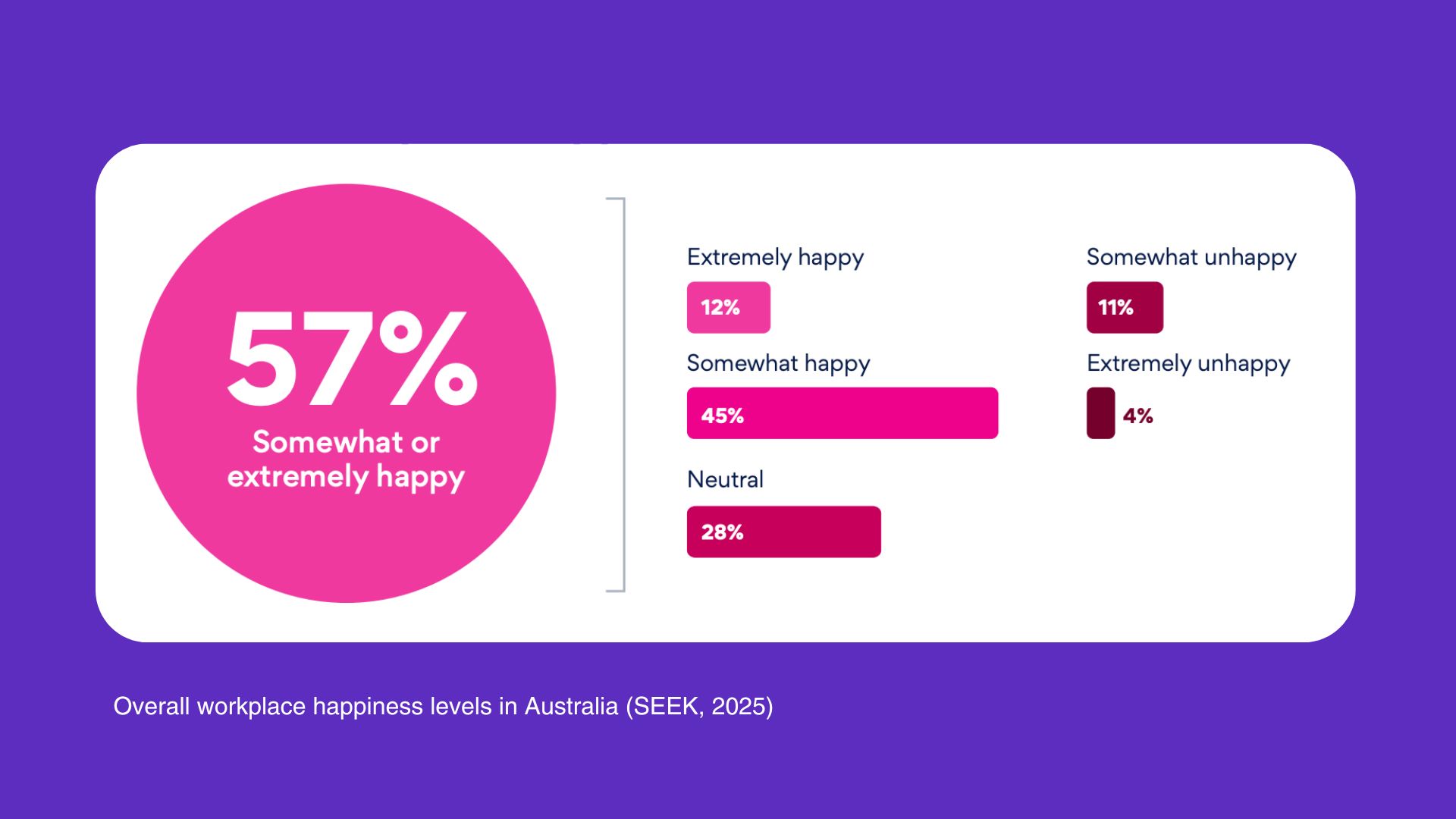
This tells us that while some people are doing well, a large portion are still struggling. And that’s something workplaces can’t afford to ignore.
What drives satisfaction and dissatisfaction at work?
Data support that the top contributors to workplace happiness aren’t flashy benefits or big salaries. Though these are extremely important, the study respondents revealed that the top drivers of happiness are those that help them feel connected, supported, and valued in their daily work.
What makes people happy at work?
Feeling a sense of purpose in their role
Enjoying their day-to-day responsibilities
Trusting and respecting their senior leaders
Being part of a positive workplace culture
Having manageable stress levels
What causes dissatisfaction?
Lack of recognition or appreciation
Feeling overwhelmed by unrealistic workloads
A sense of being stuck, with no clear path for growth
Leadership that feels unsupportive or unclear
Poor balance between work and personal life
Generational trends
SEEK’s research findings also reveal clear generational divides, with younger workers feeling significantly more stressed and burnt out than their older colleagues.
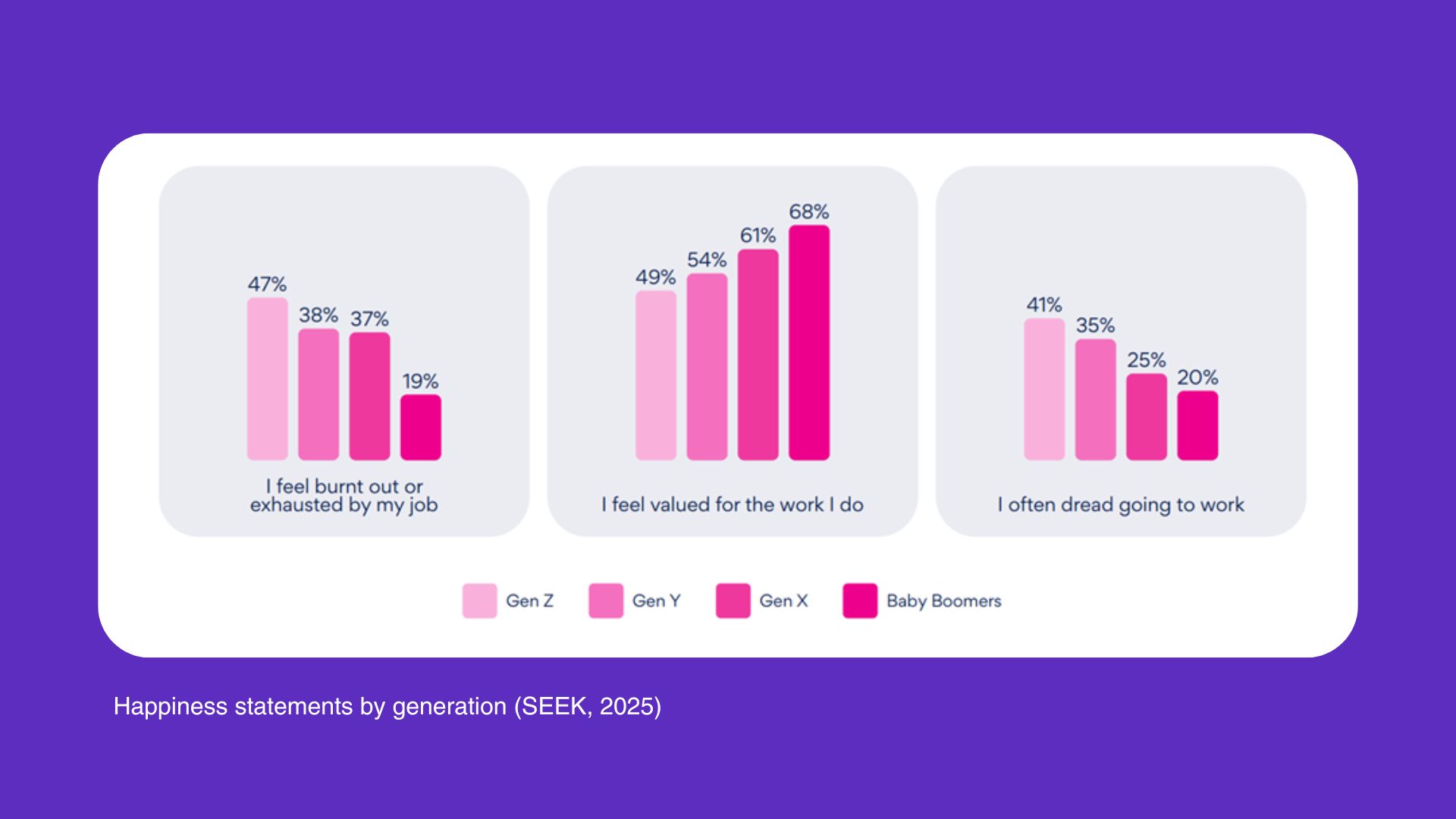
This suggests that younger workers are not only more vulnerable to stress but may also be questioning the value and direction of their work more than older generations.
What else stands out?
People who enjoy their work tasks are 34% more likely to be happy overall.
Feeling recognised for efforts is just as powerful. 31% of satisfied workers say it’s a key reason they enjoy their job.
Leadership and culture are taking centre stage. Employees are increasingly looking for transparent, supportive leaders and a respectful team culture.
These patterns point to a shift in expectations. Workers want more than just a job. They want a sense of purpose, room to grow, and support when it counts.
Shifts from 2024 vs 2025
While some workplace expectations have remained consistent, others are clearly evolving. Comparing this year’s index to 2024 gives us helpful insight into what matters most right now.
Happiness Driver
2024 Rank
2025 Rank
Change
Job security
10
5
▲ More important
Senior leadership
7
4
▲ More important
Career progression
9
7
▲ Slightly more important
Salary
6
8
▼ Slightly less important
Colleagues
8
6
▲ Slightly more important
Job stability and leadership have become much more important in the eyes of employees, likely due to growing economic uncertainty and shifting career landscapes. Interestingly, salary dropped a couple of spots, reinforcing the idea that a great culture, clarity from leaders, and real development opportunities matter more than ever.
Final thoughts
The 2025 snapshot of workplace happiness in Australia offers both reassurance and a wake-up call. It’s encouraging to see that more than half of workers feel happy in their roles. But it’s also concerning that so many still feel stressed, undervalued, or disconnected from their work.
For employers, this is an opportunity. Improving workplace happiness doesn’t require expensive perks. It starts with creating environments where people feel heard, supported, and able to do meaningful work. This means investing in leadership, encouraging regular feedback, and being willing to have honest conversations about mental wellbeing.
For employees, it’s worth reflecting on what gives you a sense of purpose and satisfaction at work. If you’re feeling burnt out, unmotivated or unsure, speaking with a therapist or career counsellor can be a helpful step in figuring out what you need and how to move toward it.